Mobile Phone Number Locator
4.04.00Reviews
Analysis ByAppCompare
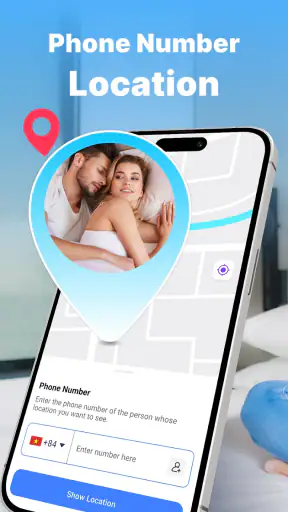
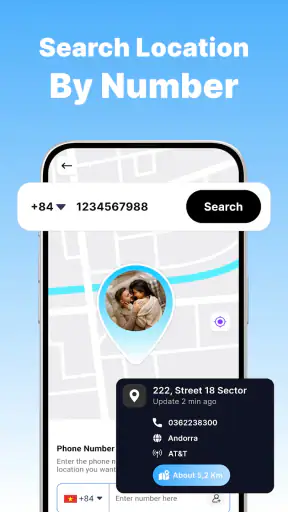
I approached Mobile Phone Number Locator as a practical travel and local utility rather than a full caller-identification service. Its job is straightforward: enter a phone number and examine details such as the likely region, carrier, area code, and country code with map-based context. That focus makes it useful in a few very specific situations, especially when an unfamiliar number appears to come from another area or country.
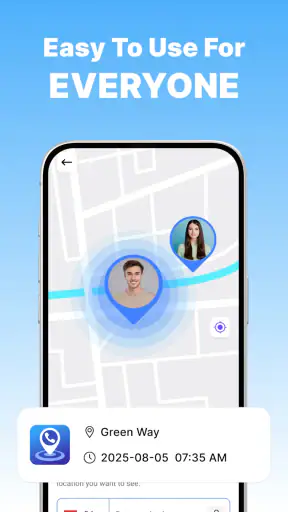
My first impression is that the app is easiest to understand when you treat it as an information lookup tool, not as a way to track a person. It can help put a number into geographic and telecommunications context, but that is different from showing a caller’s exact live position. That distinction matters before you rely on the result, particularly if you are trying to identify a suspicious call or verify a number connected with travel.
The app is free to install, carries an Everyone age rating, and is published by Terri Tovar. It has reached over a million installs and holds a 4.0 average from around 2,000 ratings, which suggests that many people find the basic idea useful while the experience is not universally perfect. The current release is version 1.0.29, and it runs on Android 8.0 or later.
How the current version fits into everyday use
A focused lookup screen instead of an overloaded travel app
What I like about the concept is its narrow purpose. Many travel apps try to combine maps, bookings, currency conversion, transport, translation, and local recommendations. This one concentrates on phone-number details. When I need to check a number quickly, that limited scope is an advantage because I am not searching through unrelated travel tools first.
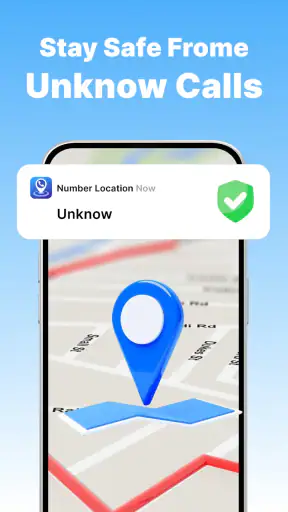
The map element also gives the result more meaning than a plain line of text. A country code may tell me where a number is registered internationally, while an area code can provide a more local clue. Seeing that information in a geographic setting makes it easier to understand whether the number appears connected to a city, region, or country I recognize.
Still, I would not interpret the map as proof of where the caller is standing. Phone numbers can be used away from their registration area, businesses can operate across several locations, and mobile numbers do not necessarily identify a precise physical position. The best way to use the app is as a first layer of context before deciding whether a call deserves attention.
A realistic travel scenario
Imagine arriving in another country and receiving a call from a number you do not recognize. Instead of calling back immediately, I would enter the number into the locator and check the country and regional information. If the result points to a place unrelated to my hotel, transport provider, accommodation, or current plans, I would treat the call more cautiously. If it matches the area where I am staying, I might investigate further through a separate trusted channel.
This workflow is useful because it slows down an impulsive response. The app does not need to identify the caller by name to be helpful. Sometimes knowing that a number belongs to an unexpected region is enough to decide that I should not return the call while roaming or share personal information.
A second use case is checking a business number before saving it. If a local service sends me a contact number, the area and country information can act as a basic consistency check. It will not replace an official website or a direct confirmation, but it can reveal an obvious mismatch between the number and the location being claimed.
What the map adds—and what it cannot add
The map is the app’s most distinctive part because it turns codes into a visual reference. For someone who does not immediately recognize regional numbering systems, that can be more approachable than reading a technical explanation of prefixes. I find it particularly helpful when comparing several numbers from different places during trip planning or while sorting through messages.
There is also a useful habit here: check the country code first, then consider the regional result, and only after that think about the caller’s identity. This order prevents the common mistake of treating a familiar-looking area code as confirmation that the caller is trustworthy. The app can organize clues, but it cannot establish intent.
Users should also remember that number portability and modern mobile services can weaken the connection between a number and a current location. A carrier or region shown by a lookup may describe numbering information rather than the owner’s present whereabouts. I consider that limitation central to using the app responsibly.
How the app has developed so far
The current release, 1.0.29, shows that the product is being maintained beyond its earliest launch stage. The app was released on October 3, 2025, so it is still a relatively new entry in the travel and local category. That combination tells me to judge it primarily by the clarity of its present lookup workflow rather than by expecting the maturity of a long-established mapping platform.
At this point, the confirmed product direction is clear: phone-number details, geographic context, carrier information, and codes presented around a map. I would welcome future improvements that make the interpretation of results even clearer, but I would not assume that an upcoming change will transform it into a caller-ID database, emergency-location tool, or people-tracking service. Those are different product categories with different requirements.
For existing users, the move to the current version should be viewed as part of normal product refinement rather than a reason to change how the app is used. The safest approach remains the same: use the result as a clue, verify important information elsewhere, and avoid treating a map marker as a precise personal location.
Where it compares well with familiar alternatives
The usual alternatives depend on what I am trying to learn. A search engine may be better when I want to find public reports about a business or a widely known spam number. A contacts app is better for numbers I already recognize. A caller-identification service may offer names or community reports, while a navigation app is more appropriate when I need directions to a confirmed place.
Mobile Phone Number Locator occupies a narrower middle ground. It is more geographically focused than a basic contacts list and less dependent on a community-maintained identity database than many caller-ID tools. That can make it a better first check for country, carrier, and regional clues. On the other hand, it is not the best choice if my main question is “Who is calling?” rather than “What numbering area does this number appear connected to?”
I also prefer it to guessing from a prefix manually. Manual searches can produce scattered explanations, outdated tables, or confusing regional terminology. A dedicated map-based interface gives me one place to inspect the information. The trade-off is that the visual presentation may feel unnecessary for someone who only wants a quick code lookup.
Small workflows that make the results more useful
One practical tip is to copy the complete number, including its international prefix when available, rather than entering only the local portion. A partial number can remove exactly the country context that makes the lookup meaningful. I would also check the number in the format in which it was received and avoid casually altering digits just to force a result.
Another useful workflow is to compare the lookup with the message or call context. If a supposed local hotel sends a number associated with a distant country, I would pause and verify the hotel through its official booking record. If the number appears consistent, I would still avoid sharing payment details until the business is independently confirmed. The app is most valuable when it supports this two-step decision process.
A third tip is to record the result only when there is a genuine reason to revisit it. Saving every unknown number can create a cluttered contact list and give a false sense of certainty. For a number connected with a delivery, booking, or service appointment, I would note the region and then confirm the organization through another source rather than treating the lookup as a permanent identity record.
Where the experience may create friction
The biggest limitation is built into the subject itself: a phone number does not always map neatly to a person or a present location. Even a correct carrier or regional indication may not answer the question that motivated the lookup. Someone expecting an exact address, live position, or guaranteed owner name is likely to be disappointed.
The app may also feel too specialized for occasional users. If I only receive unfamiliar calls once in a while, a web search or the phone’s built-in tools may be enough. The dedicated interface becomes more worthwhile when I regularly handle international numbers, travel-related contacts, or regional codes that I do not recognize.
There is another trade-off around interpretation. A map looks authoritative, so it can encourage overconfidence. I would like every user to remember that visual precision is not the same as factual precision. The displayed area should guide further checking, not replace it.
The app includes optional in-app purchases priced from $3.99 to $26.99 per item. Because the core download is free, I would begin with the no-cost experience and decide whether any paid option genuinely improves my own workflow. I would not pay simply to obtain reassurance about a suspicious call; for sensitive situations, independent verification is more valuable than an upgraded lookup.
Who should use it and who should skip it
I think this app is a good fit for travelers, people who receive international calls, small business owners checking unfamiliar contacts, and anyone who wants regional phone information presented visually. It is also suitable for users who prefer a dedicated lookup tool instead of piecing together country codes and area-code references from several websites.
I would skip it if my priority is blocking spam, identifying callers by name, tracing a device in real time, or finding someone’s exact address. Those needs call for different tools and, in some cases, direct cooperation from the device owner or a service provider. Installing this app will not turn a normal phone number into a reliable live-tracking method.
It is also not the right choice for making a serious safety decision on its own. If a message involves money, account access, urgent travel changes, or personal documents, I would verify the sender through an official channel regardless of what the map shows. The locator can reduce uncertainty, but it cannot authenticate a request.
Privacy-minded habits and sensible expectations
Whenever I use a number-lookup app, I try to limit the information I enter to what is necessary. I would not add names, addresses, booking references, or message contents when the task only requires a phone number. That keeps the lookup focused and reduces the chance of exposing unrelated personal details.
I would also avoid using the result to make assumptions about an individual. A regional match can describe a numbering assignment, not a person’s nationality, home, or current activity. This is especially important when the number belongs to a shared business line, a call center, or someone traveling.
The Everyone rating makes the app broadly accessible, but broad accessibility does not remove the need for good judgment. Younger users should understand that a map-based result is an estimate of numbering context, not evidence that a stranger is nearby or trustworthy.
What I would watch in future releases
Because the product is still early in its release history, I would pay attention to how clearly future updates explain results and handle ambiguous numbers. Better explanations would help users distinguish country codes, area codes, carrier information, and map context instead of seeing them as interchangeable proof of location.
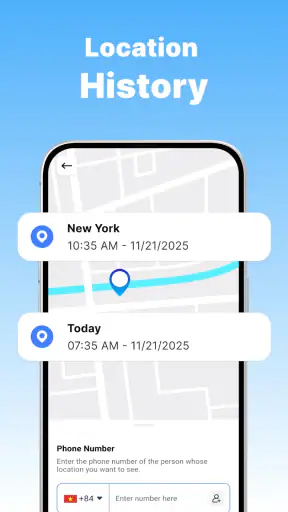
I would also watch whether the app becomes more useful for repeated lookups without becoming cluttered. A simple history, clearer comparison between numbers, or an easier way to revisit a result could help frequent travelers, but those additions should not make a quick check slower. The strongest direction would preserve the focused nature of the current tool.
Another important area is trust. If the app presents uncertain regional information, the wording should make that uncertainty easy to understand. Clear boundaries would be a strength, not a weakness, because they would prevent users from confusing a numbering lookup with surveillance or caller authentication.
My recommendation after using it
Mobile Phone Number Locator is worth trying if you want a quick geographic and carrier-oriented view of unfamiliar phone numbers. I like it most as a pause button: before returning a call, paying a supposed local service, or trusting a travel-related message, I can inspect the number’s broader context and decide what to verify next.
Its value depends on realistic expectations. The app can organize useful clues about regions, carriers, area codes, and country codes, but it cannot prove who is holding the phone or where that person is now. Once I accepted that boundary, the tool made more sense and became easier to use responsibly.
For occasional checks, the free version is a sensible starting point. Frequent international travelers and people who regularly handle unfamiliar numbers may get more practical value from keeping it available, while users seeking full caller identification or live tracking should choose a different solution. My recommendation is positive, but specifically for informed number lookup—not for certainty about a caller.
FAQ
What is Mobile Phone Number Locator and how does it work?
Mobile Phone Number Locator is designed to provide general information associated with a phone number, such as its country, region, or telecommunications network. After entering a number, the app may use publicly available numbering data to display an approximate location. It does not normally identify a person’s exact address or provide real-time GPS tracking, so results should be treated as estimates rather than precise personal information.
Can Mobile Phone Number Locator track someone’s exact location in real time?
No. A phone number locator cannot usually track another person’s exact, live GPS position simply from their number. Accurate location sharing requires the device owner’s permission and access through an appropriate location-sharing service. The app is primarily useful for checking country codes, regional information, and possible carrier details. Be cautious of any service claiming it can secretly reveal someone’s precise location without consent.
Is Mobile Phone Number Locator free to download and use?
The app may be available to download at no initial cost, but some features can include advertisements, usage limits, in-app purchases, or subscription plans. Before using advanced tools, review the pricing information shown on the app store and inside the application. Check whether a free trial automatically changes into a paid subscription, and confirm cancellation terms if you decide the extra features are not worthwhile.
What information does the app require, and is it safe to use?
Typically, Mobile Phone Number Locator only needs the phone number you want to check, although some versions may request access to contacts, phone functions, location, or other device permissions. Grant only permissions that are necessary for the advertised features. It is also advisable to read the privacy policy, avoid entering sensitive personal information, and download the application from an official store to reduce security risks.
Why might the results be inaccurate or incomplete?
Phone-number information is not always permanent or precise. Numbers can be moved between carriers, used while traveling, registered in a different region, or assigned to virtual and internet-based services. Numbering databases may also be outdated, especially for recently transferred or international numbers. For these reasons, the app may show only a broad country or region and should not be used as official proof of identity, ownership, or location.
Pros
- Simple interface that makes number searches easy for first-time users.
- Can help identify the country and general region linked to a number.
- Useful for checking unfamiliar numbers before returning a call.
- Search results are delivered quickly on most supported devices.
- Works as a handy reference tool for spotting international numbers.
Cons
- It cannot provide a caller’s exact live location.
- Results may be incomplete for private or unlisted numbers.
- Some features may require internet access to work properly.
- Number databases can contain outdated or inaccurate information.
- Privacy policies and permissions should be checked before using the app.